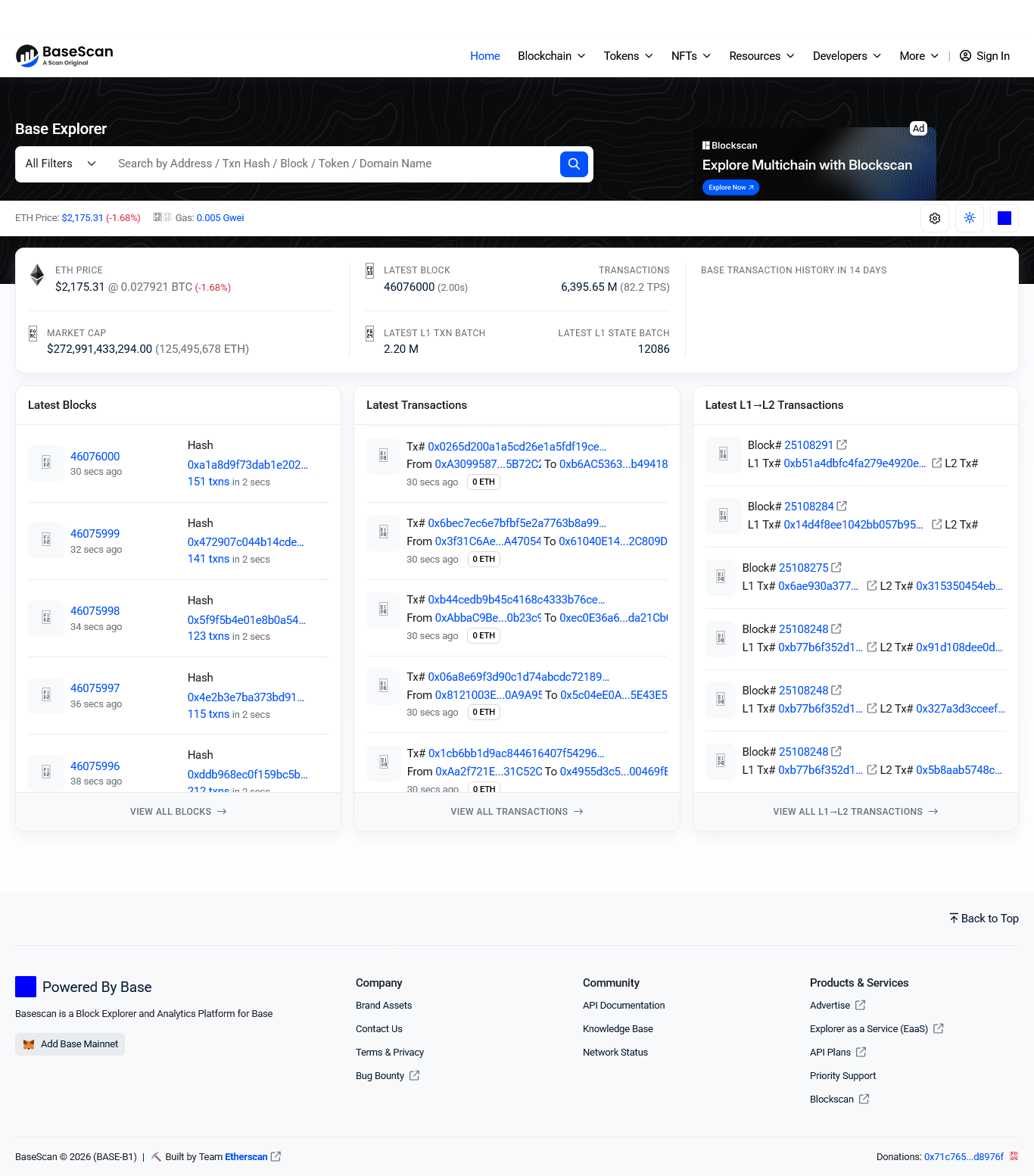
BaseScan: The Blockchain Explorer Powering the Base Ecosystem :-
Introduction ;
As blockchain adoption continues to accelerate, transparency and accessibility remain essential for developers, investors, and everyday users. Every blockchain ecosystem relies on tools that allow participants to inspect transactions, monitor smart contracts, and verify on-chain activity in real time. For the Base blockchain ecosystem, that tool is BaseScan.
Built specifically for the Base network, BaseScan serves as a comprehensive blockchain explorer that enables users to search, verify, and analyze data on the Base chain. Whether someone wants to track a token transfer, inspect decentralized finance (DeFi) activity, or audit smart contracts, BaseScan provides the infrastructure necessary to navigate the ecosystem efficiently.
The platform has quickly become one of the most important utilities within the rapidly growing Base network, helping developers and users interact with blockchain data in a transparent and user-friendly way.
What Is BaseScan ?
BaseScan is a blockchain explorer designed for the Base network, an Ethereum Layer 2 scaling solution developed by Coinbase. BaseScan enables users to explore and monitor all activity occurring on the Base blockchain.
Users can enter wallet addresses, transaction hashes, token names, or smart contract addresses to retrieve detailed blockchain data instantly.
BaseScan is powered by the same infrastructure team behind Etherscan, giving it a familiar interface and reliable performance for users already experienced with Ethereum ecosystem tools.
Understanding the Base Network :-
To understand the importance of BaseScan, it is necessary to understand the Base blockchain itself.
Coinbase launched Base as an Ethereum Layer 2 network aimed at improving scalability, lowering transaction costs, and increasing transaction throughput while maintaining Ethereum security.
Base is built using the OP Stack, the open-source development stack behind the Optimism ecosystem. This architecture allows Base to inherit Ethereum’s security guarantees while providing faster and cheaper transactions.
Key goals of Base include:
. Scaling decentralized applications (dApps)
. Reducing gas fees , Improving onboarding for mainstream users , Supporting Web3 development , Enhancing interoperability within Ethereum ecosystems
As adoption of Base grows, tools like BaseScan become increasingly critical for ecosystem transparency and usability.
Core Features of BaseScan :-
1. Transaction Tracking :-
One of the most widely used features of BaseScan is transaction monitoring.
Users can search for a transaction hash and instantly access information such as:
. Sender and receiver addresses , Transaction status , Gas fees , Timestamp , Token transfers , Smart contract interactions , Block confirmations
This functionality is essential for users verifying deposits, withdrawals, NFT transfers, or DeFi transactions.
2. Wallet Address Analysis :-
BaseScan allows users to inspect wallet addresses in detail.
Wallet pages typically display:
. Current balances , Token holdings , Transaction history , NFT assets , Internal transactions , Smart contract interactions
This transparency allows traders, analysts, and developers to monitor on-chain behavior and track ecosystem activity.
3. Smart Contract Verification :-
Smart contract transparency is one of the foundational principles of blockchain technology.
Developers can verify smart contracts on BaseScan by publishing source code directly through the explorer. Once verified, users can:
. Read contract functions , Interact with smart contracts , Audit contract logic , Identify potential vulnerabilities
This feature significantly improves trust within decentralized applications.
4. Token Tracking :-
BaseScan supports token analytics across the Base ecosystem.
Users can monitor:
. Stablecoins , Governance tokens , NFT collections , Token supply metrics , Holder distributions
As the Base ecosystem expands, token discovery and monitoring become increasingly valuable for investors and researchers.
5. Gas Fee Monitoring :-
Blockchain users often need to estimate transaction costs before executing transfers or smart contract interactions.
BaseScan provides real-time gas tracking tools that help users determine:
. Current gas prices , Estimated transaction fees , Network congestion levels
Because Base operates as a Layer 2 network, gas fees are typically far lower than Ethereum mainnet fees.
6. Block Explorer Functionality :-
Users can also inspect blockchain blocks individually.
Block pages include:
. Block height , Validator/sequencer information , Transaction counts , Gas utilization , Block rewards , Timestamp data
This functionality is particularly useful for blockchain researchers and infrastructure developers.
Why BaseScan Matters
Transparency ;
Blockchain systems depend on public verifiability. BaseScan ensures that every transaction and smart contract interaction on Base can be independently audited.
Security ;
Users can verify transaction confirmations, inspect suspicious wallet activity, and analyze smart contracts before interacting with decentralized applications.
Developer Support ;
Developers rely heavily on blockchain explorers during testing, deployment, and debugging. BaseScan simplifies smart contract verification and blockchain analysis.
Ecosystem Growth ;
As decentralized applications launch on Base, BaseScan acts as a foundational infrastructure layer supporting wallets, analytics platforms, NFT marketplaces, and DeFi protocols.
BaseScan and the Future of Layer 2 Adoption :-
Ethereum scaling solutions are becoming increasingly important as blockchain usage grows worldwide. High gas fees and network congestion on Ethereum mainnet have accelerated demand for Layer 2 networks like Base.
BaseScan plays a major role in making Layer 2 ecosystems more accessible by providing transparent blockchain data to users and developers alike.
. As Base adoption increases, BaseScan could evolve further with:
.. Advanced analytics dashboards , Enhanced developer APIs , DeFi tracking tools , NFT analytics , Cross-chain monitoring , Institutional blockchain analytics
Its continued development will likely mirror the expansion of the Base ecosystem itself.
Challenges and Limitations ;
Despite its strengths, BaseScan also faces several challenges:
. Data Complexity ;
Blockchain data can be overwhelming for beginners unfamiliar with wallet structures, gas fees, or smart contracts.
. Scam Tokens ;
Like many blockchain ecosystems, Base may experience fraudulent tokens or malicious contracts. Users must still exercise caution even when using . transparent explorers.
. Network Dependency ;
BaseScan’s utility depends heavily on the ongoing growth and stability of the Base network.
Conclusion :-
BaseScan has emerged as an essential infrastructure tool within the Base ecosystem. By offering transparent access to transactions, wallets, smart contracts, and token data, it empowers users to navigate the blockchain safely and efficiently.
As Ethereum Layer 2 adoption continues to expand, blockchain explorers like BaseScan will remain central to ensuring transparency, trust, and accessibility across decentralized ecosystems.
For developers, traders, investors, and blockchain enthusiasts, BaseScan represents far more than a simple explorer — it is a gateway into the rapidly evolving world of Base and Layer 2 blockchain innovation.